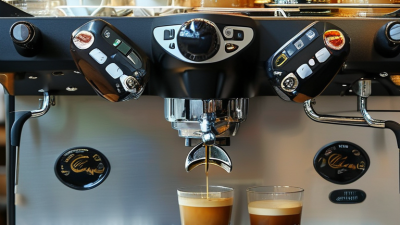
China Best Coffee Vending Machine Manufacturer?
Choosing the China Best Coffee Vending Machine Manufacturer requires more than comparing factory prices. It means examining the complete coffee vending experience, from bean grinding to customer support. A reliable manufacturer should understand coffee extraction, machine hygiene, temperature stability, payment systems, and daily operating pressure.
Vending industry expert Jeff Lenard has described convenience as “the product” in modern vending. That idea matters here. A machine may look attractive in a showroom, yet perform poorly beside a busy office entrance. Ask for realistic details. How quickly does it serve one cup? Can operators adjust milk, sugar, strength, and cup size? What happens when the grinder becomes clogged at 8:00 a.m.?
A strong Chinese manufacturer should provide factory evidence, product testing records, spare-part planning, and responsive technical training. Look closely at stainless-steel contact areas, boiler recovery time, cleaning access, and software stability. These details become expensive problems when ignored.
Experience also brings an uncomfortable lesson. The cheapest quotation is rarely the lowest operating cost. However, the most expensive machine is not automatically the best choice. I would compare sample drinks, maintenance videos, warranty terms, and customer references before signing an order.
No supplier is perfect. That is worth remembering. A trustworthy partner explains limitations instead of promising effortless operation. For international buyers, the best manufacturer combines consistent coffee quality, practical customization, transparent communication, and dependable after-sales service. That combination creates a coffee vending solution built for real locations, not just impressive brochures.
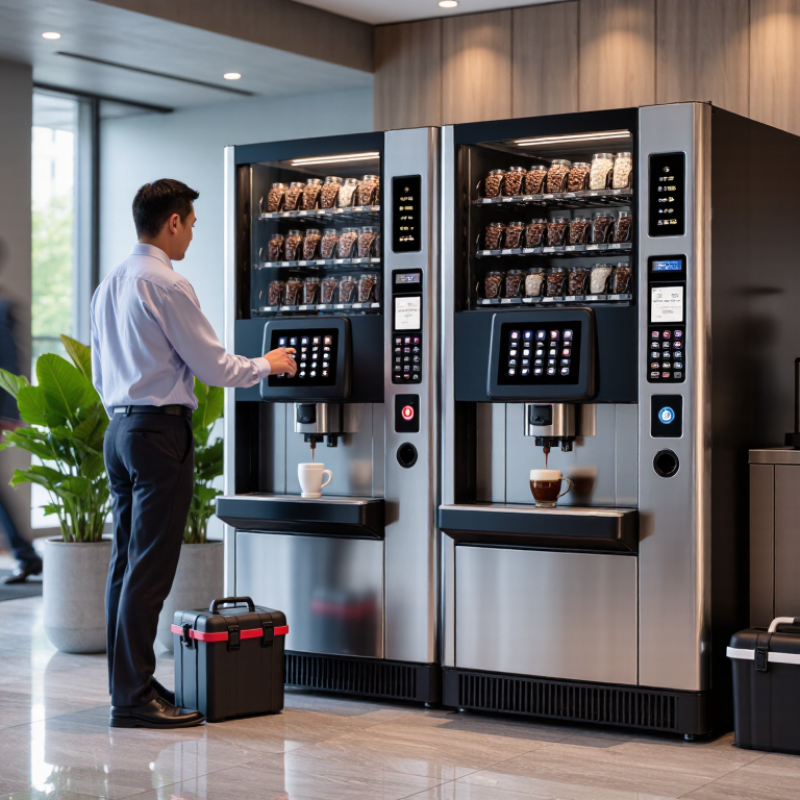
What Defines a Leading Coffee Vending Machine Manufacturer in China
A leading coffee vending machine manufacturer in China is defined by more than production capacity or a polished showroom.
It should combine practical engineering, stable supply chains, and clear quality control. Experienced manufacturers test grinding systems, heating units, payment interfaces, and refrigeration under repeated daily use.
Small failures matter. A jammed cup dispenser can stop sales during a busy morning.
Professional manufacturers also understand different operating environments.
A machine placed in an office needs quiet performance, while a station unit may require stronger protection against dust and frequent use.
Reliable suppliers provide detailed specifications, sample testing, spare-part support, and readable maintenance instructions.
They should explain brewing temperature, cleaning cycles, energy consumption, and expected service life without hiding weak points.
No supplier gets every detail right. Honest communication is still a strong sign of competence.
Tips:
Ask for factory inspection evidence, product testing records, and a live machine demonstration.
Check how quickly technical teams answer practical questions.
Request references from comparable installations, not only attractive projects.
Confirm software updates, warranty terms, and replacement-part availability before signing an agreement.
A careful evaluation may reveal that the cheapest quotation lacks training or long-term support.
Look beyond the machine’s appearance. Reliability is built into the details.
Key Features of High-Quality Coffee Vending Machines
China Best Coffee Vending Machine Manufacturer?
A high-quality coffee vending machine should deliver consistent taste, not only attractive appearance. The brewing system needs stable temperature control and accurate water pressure. Fresh grinding matters because stale grounds can flatten the cup. A practical machine should also offer adjustable coffee strength, milk options, and cup sizes.
Hygiene is equally important. Removable brewing parts, sealed ingredient containers, and automatic rinsing reduce daily cleaning risks. During equipment evaluation, check how easily staff can access these parts. A complicated cleaning process often becomes a neglected task. That weakness deserves attention. Reliable machines also need strong refrigeration, clear error messages, and durable touchscreens. Payment security and simple menu design improve the customer experience. However, too many functions can confuse users and increase maintenance demands.
Tips: Test the machine with real water, coffee, and milk before purchase. Ask for brewing records, temperature tests, and maintenance instructions. Inspect the first cup after several idle hours. It may taste different. Compare that result with a busy service period. Choose equipment with responsive technical support, replaceable parts, and transparent warranty terms. The best manufacturer is not always the one offering the lowest price. Reliability is easier to value after repeated daily use.
How to Evaluate Chinese Coffee Vending Machine Manufacturers
China Best Coffee Vending Machine Manufacturer?
How to Evaluate Chinese Coffee Vending Machine Manufacturers
The best manufacturer is not always the cheapest. Evaluate practical experience, technical depth, and after-sales reliability. Ask how many machines are operating in similar locations. A factory serving offices may not understand busy transport hubs. Request videos of production, assembly, and quality inspections. More importantly, visit the facility or arrange an independent audit. Check stainless-steel surfaces, wiring, pumps, grinders, and payment interfaces. Small details reveal manufacturing discipline. I once trusted a polished sample too quickly. That was a mistake.
Tips: Request a working machine for testing. Measure brewing time, temperature stability, noise, cleaning effort, and ingredient waste. Ask for test reports, safety certificates, warranty terms, and spare-parts availability. Verify whether certificates match the actual model, not an older version.
Reliable suppliers provide clear technical files and traceable component information. They should explain water filtration, software updates, remote monitoring, and fault alerts in simple language. Request references from customers with comparable climates and sales volumes. Contact those customers directly. A serious manufacturer will not avoid difficult questions about downtime or failed components. Compare total operating cost, not only the purchase price. Include shipping, installation, training, consumables, maintenance, and replacement parts. Some factories promise extensive customization, but excessive changes can delay delivery and complicate repairs. That trade-off deserves careful discussion.
Manufacturing Standards, Customization, and Quality Control
China Best Coffee Vending Machine Manufacturer?
Choosing a reliable coffee vending machine manufacturer requires more than comparing prices. Manufacturing standards should cover food-contact materials, electrical safety, temperature control, and stable water delivery. Experienced factories usually maintain documented production procedures and traceable component records. Ask for inspection reports, calibration records, and practical test results. A clean assembly area matters, too. Small details often reveal larger habits.
Tips: Request a sample machine before placing a large order. Test brewing speed, drink temperature, payment functions, and cleaning access. Confirm how quickly replacement parts and technical support are provided. Never rely on photographs alone.
Customization should improve the machine, not simply make it look different. A professional manufacturer can adjust cup sizes, recipes, screen languages, payment systems, cabinet dimensions, and software settings. Quality control should include incoming material checks, assembly inspections, electrical testing, leak testing, and continuous operation trials. Ask whether every finished machine receives a signed inspection record. This creates accountability, although paperwork cannot replace hands-on testing. In real projects, small oversights still happen, such as a tight service panel or confusing menu wording. A dependable supplier listens, corrects the issue, and records the improvement. Reliable communication remains part of product quality.
China Best Coffee Vending Machine Manufacturer? - Manufacturing Standards, Customization, and Quality Control
| Evaluation Dimension | Manufacturing Requirement or Standard | Typical Technical Data or Target | Recommended Verification Evidence | Buyer Evaluation Notes |
|---|---|---|---|---|
| Quality Management | ISO 9001 quality management system or an equivalent documented process | Documented control of purchasing, production, inspection, corrective action, and traceability | Valid certificate, scope of certification, internal audit records, and corrective-action samples | Confirm that the certification scope covers appliance manufacturing rather than unrelated business activities. |
| Electrical Safety | Applicable requirements from IEC 60335-1 and IEC 60335-2-75 for commercial dispensing appliances, where relevant | Protection against electric shock, abnormal operation, overheating, insulation failure, and mechanical hazards | Electrical safety test reports, insulation test records, grounding continuity results, and product risk assessment | Final requirements depend on the destination market, machine design, voltage, heating system, and certification route. |
| Electromagnetic Compatibility | Applicable EMC requirements for emissions and immunity in the destination market | Stable operation during conducted and radiated disturbance testing without unsafe malfunction | EMC test report from a competent laboratory and test configuration documentation | Review the report for the exact model, power supply, communication modules, and accessories being purchased. |
| Material Compliance | RoHS substance restrictions and other destination-market chemical requirements when applicable | Restricted substances controlled in electrical components, cables, solder, coatings, and plastic parts | Supplier declarations, material declarations, component records, and laboratory screening reports | Food-contact components may require additional local or regional compliance documentation. |
| Food-Contact Materials | Use of suitable stainless steel, food-grade polymers, seals, tubing, and dispensing components | Materials selected for resistance to heat, moisture, coffee oils, cleaning chemicals, and repeated use | Material certificates, declarations of compliance, component specifications, and migration-test evidence where required | Request a complete material list for the water path, powder path, beverage outlet, mixing chamber, and waste container. |
| Temperature Control | Closed-loop control for boiler, water tank, or thermoblock heating system | Typical hot-water control range: approximately 85–95°C, subject to recipe and machine design | Calibration records, temperature mapping, sensor specifications, and repeatability test results | Temperature targets should be validated against the selected beverage recipe and local food-safety requirements. |
| Beverage Consistency | Controlled dosing of water, coffee, milk, sugar, chocolate, and other ingredients | Buyer-defined dosing tolerance, commonly specified as a percentage of the programmed dose after calibration | Repeated-cup test data, scale records, recipe-management screenshots, and calibration procedures | Compare taste consistency across multiple cycles, ingredient levels, ambient temperatures, and operating shifts. |
| Customization Options | Configurable cabinet, payment interface, user interface, recipes, languages, and connectivity | Possible options include touchscreen size, cashless payment integration, telemetry, logo-free panels, and multiple menu languages | Approved drawings, interface prototypes, software feature list, communication protocol details, and sample approval records | Define which custom features are included in the quoted price and which require tooling, software, or engineering charges. |
| Cabinet and Surface Finish | Corrosion-resistant metal structure with durable powder coating or stainless-steel exterior panels | Consistent panel gaps, secure hinges, protected wiring, smooth edges, and cleanable external surfaces | Incoming material inspection, coating inspection, dimensional records, and approved production samples | For humid or coastal environments, specify corrosion protection and environmental operating conditions in the purchase agreement. |
| Leak and Pressure Testing | Inspection of water tanks, pumps, valves, tubing, fittings, boilers, and drainage connections | No visible leakage during pressure, filling, dispensing, and drainage tests under defined conditions | Pressure-test records, leak-test checklist, visual inspection results, and corrective-action history | Testing should cover both normal operation and foreseeable conditions such as blocked outlets or incorrect installation. |
| Cleaning and Hygiene Design | Accessible beverage pathways and removable parts for routine cleaning and sanitation | Clear cleaning instructions, scheduled cleaning prompts, removable mixing parts, and separated waste collection | Cleaning manual, exploded diagrams, sanitation procedure, cleaning-time study, and service-access inspection | Evaluate cleaning frequency, tool requirements, chemical compatibility, and the time needed for daily and weekly maintenance. |
| Reliability Testing | Functional, endurance, thermal, vibration, transportation, and power-cycle testing based on the machine design | Test duration and cycle count should be defined in the approved product validation plan | Reliability test plan, failure log, life-test results, transport simulation records, and final validation report | A credible manufacturer should provide model-specific test evidence instead of only general factory photographs. |
| Incoming Quality Control | Inspection of electrical parts, pumps, sensors, valves, displays, sheet metal, packaging, and food-contact components | Sampling level, acceptance criteria, and inspection frequency documented for critical components | Incoming inspection standards, supplier qualification records, batch traceability, and nonconforming-material reports | Critical safety and food-contact parts should receive stricter controls than cosmetic or non-critical components. |
| In-Process Quality Control | Checkpoint inspections during assembly, wiring, software loading, plumbing, sealing, and calibration | Key checkpoints completed before the machine proceeds to the next assembly stage | Work instructions, operator checklists, barcode or serial-number records, and process audit results | Serial-number traceability helps connect the finished machine to components, operators, test records, and shipment data. |
| Final Acceptance Testing | 100% functional inspection before shipment for essential safety and operating functions | Typical checks include start-up, dispensing, heating, grinding or powder dosing, payment simulation, alarms, cleaning cycle, and shutdown | Signed final inspection report, beverage test results, electrical safety record, software version, and photographic evidence | Agree on a pre-shipment inspection checklist and define the acceptance standard before mass production begins. |
| After-Sales Support | Availability of spare parts, technical manuals, remote diagnostics, and service training | Recommended documentation includes parts list, wiring diagram, fault-code table, maintenance schedule, and troubleshooting guide | Service-level agreement, spare-parts list, response-time commitment, training materials, and warranty terms | Assess long-term support for pumps, valves, sensors, displays, control boards, seals, grinders, and payment hardware. |
Note: Applicable standards, certifications, temperature settings, testing scope, and acceptance criteria should be confirmed for the target country, machine configuration, beverage ingredients, and intended operating environment.
After-Sales Service, Certifications, and Global Export Support
China Best Coffee Vending Machine Manufacturer?
A dependable manufacturer proves service quality after installation, not during a sales call. Ask for a written warranty covering heating units, pumps, grinders, screens, and payment modules. Clear response times matter when a machine stops beside a busy office entrance. Remote diagnosis can identify temperature errors before a technician arrives. Practical support includes video training, spare-part lists, maintenance schedules, and direct access to trained engineers.
Small details matter.
Experienced suppliers should provide service records and replacement guidance. A useful spare-parts kit may include seals, valves, filters, and beverage outlets. These parts reduce downtime in distant locations. Still, no service system is perfect. Time-zone delays can frustrate operators, especially during holidays. Confirm escalation procedures before signing a purchase agreement.
Certification documents deserve careful checking. Request valid test reports, declaration documents, electrical specifications, and food-contact material information. CE or other market-required approvals may apply, depending on the destination country. RoHS documentation can support restricted-material compliance, but a logo alone proves little. Verify the model number, issuing laboratory, report date, and certificate scope. Export support should also include wooden-crate standards, commercial invoices, packing lists, installation manuals, and customs-ready product data. A manufacturer familiar with overseas shipments can explain voltage, plug types, water requirements, and language options. These details often prevent expensive surprises at the port.
Related Posts
-
Top Vending Coffee Machines for Your Business Needs?
-
Top 2025 Vending Machine Locations You Need to Know About
-
Best 7 Vending Machine Financing Options for Small Business Owners in 2023
-
Best Snack Machines for Your Business Needs 2026?
-
How to Choose the Best Food Vending Machines for Your Business?
-
Top 10 Refurbished Vending Machines for Global Buyers