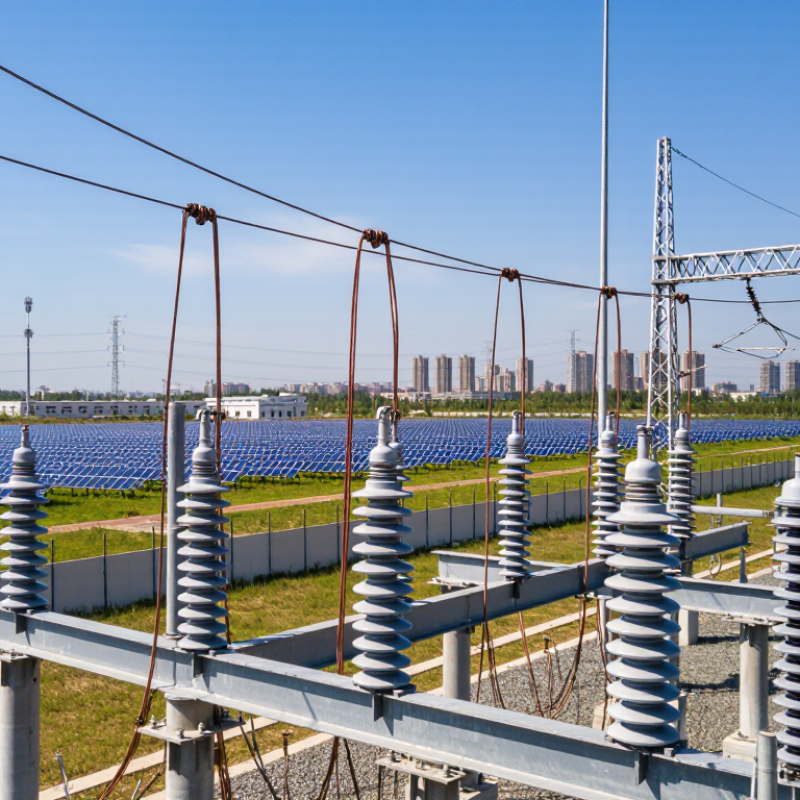
China Top Lightning Arrester Manufacturers Suppliers?

Choosing among China’s top Lightning Arrester manufacturers and suppliers requires more than comparing prices. The right partner should demonstrate stable production, documented testing, and practical experience with different electrical environments. China has a broad manufacturing base, serving substations, solar farms, railway systems, industrial plants, and commercial buildings. However, supplier quality varies. A polished website is not proof of reliable performance.

This guide introduces key manufacturers and suppliers through measurable criteria. These include product design, raw material control, factory capability, testing procedures, export experience, and after-sales support. Look for arresters tested against relevant IEC requirements, such as IEC 60099-4, when applicable. Ask for routine test records, type-test reports, zinc oxide varistor details, leakage current data, and enclosure protection information. Clear documentation matters.

Small details reveal expertise.

A dependable supplier should explain how its Lightning Arrester performs during repeated surges, moisture exposure, and long-term voltage stress. Factory visits, sample inspections, and independent verification can reduce purchasing risks. In my experience, communication speed also matters when specifications change. Some suppliers respond quickly but provide vague technical answers. Others offer strong engineering support but lack flexible delivery options. No manufacturer is perfect, and supplier rankings can become outdated as factories expand or change ownership. Buyers should therefore confirm current certifications, production capacity, and reference projects before signing a contract. This article provides a practical starting point, not a substitute for technical due diligence.

China Top Lightning Arrester Manufacturers Suppliers?

What Is a Lightning Arrester and How Does It Work?

A lightning arrester protects electrical equipment from sudden overvoltage. It is installed between a live conductor and ground. Under normal voltage, it presents high resistance and carries very little current. During a lightning surge, its resistance drops sharply. The arrester then redirects dangerous energy toward the grounding system. Voltage is limited to a safer level. The event may last only microseconds.

Most modern arresters use metal-oxide varistors. These components respond quickly and reset after moderate surges. However, they are not magic. A severely damaged arrester may remain shorted or lose protection capacity. Proper coordination matters. The arrester’s continuous operating voltage, nominal discharge current, energy rating, and response characteristics should match the electrical system. AC and DC applications require different considerations.

When comparing lightning arrester manufacturers or suppliers in China, buyers should request test reports, material details, production traceability, and clear installation instructions. Reliable suppliers explain grounding requirements instead of promising unlimited protection. Field inspections often reveal loose connections, excessive cable length, or poor earth resistance. These small weaknesses can reduce performance significantly. Maintenance teams should check indicator windows, terminals, insulation, and weather damage. Testing is valuable, but it cannot replace sound system design. Designers may also overlook altitude, pollution, temperature, and repeated surge exposure. A qualified electrical professional should verify the complete protection scheme before energizing equipment.

China Top Lightning Arrester Manufacturers Suppliers? — What Is a Lightning Arrester and How Does It Work?

A lightning arrester is a surge-protection device that diverts dangerous transient current to earth and limits the voltage reaching connected electrical equipment. The chart below shows the maximum lightning peak-current levels associated with the four Lightning Protection Levels defined in IEC 62305-1. These values are protection-design references, not product ratings.

Higher protection levels represent more severe lightning-current conditions. In practical systems, a metal-oxide varistor arrester conducts during a surge and returns to a high-resistance state after the transient has passed.

Types of Lightning Arresters Made in China

China’s lightning arrester manufacturers produce several types for substations, overhead lines, buildings, and renewable-energy systems. The most common design is the metal-oxide arrester. It uses zinc-oxide varistors to limit surge voltage without series gaps. Distribution models often use polymer housings, while station-class units may use porcelain or composite insulation.

Polymer housings are lighter and resist cracking during transport. Porcelain versions remain useful where mechanical strength and established field practices matter. Line arresters protect conductors near exposed poles.

Station arresters handle higher energy at transformer and switchgear connections. Low-voltage arresters protect control panels, photovoltaic inverters, and communication equipment.

According to MarketsandMarkets’ 2024 assessment, the global lightning protection market could grow from about USD 4.8 billion in 2024 to USD 7.3 billion by 2029. That expansion increases demand for tested surge equipment. However, product selection should not follow market growth alone. Engineers should check residual voltage, discharge-current ratings, thermal stability, and sealing quality. IEC 60099-4 and IEEE C62.11 provide useful testing frameworks for metal-oxide arresters.

Details matter. A suitable arrester should match the system voltage, grounding method, pollution level, and expected lightning exposure. Factory inspection records should include routine tests and leakage-current checks. Some specifications look complete but omit altitude correction or housing creepage distance. That is a weakness. Real installations also need correct earthing and short connecting leads. Even a high-quality arrester performs poorly when installation practice is careless.

Leading Chinese Lightning Arrester Manufacturers and Suppliers

China’s leading lightning arrester manufacturers and suppliers serve power networks, industrial plants, rail systems, and commercial buildings. Experienced producers usually offer metal-oxide arresters for medium-, high-, and extra-high-voltage applications. Their products help limit surge voltage during lightning strikes and switching events.

Quality begins with material control. Zinc oxide varistors need stable electrical performance, not just attractive test data. Reliable factories inspect ceramic bodies, sealing rings, terminals, and pressure-relief structures at several stages. Many suppliers also provide routine tests, leakage-current checks, and aging assessments. Ask for test records.

Field experience matters. A supplier should understand pollution levels, altitude, humidity, grounding resistance, and local installation practices. A coastal substation may need stronger sealing than an inland facility. Clear drawings and accurate voltage ratings prevent expensive mistakes. Communication matters too.

Small details matter.

Professional Chinese suppliers often support customized housings, connection terminals, monitoring accessories, and export documentation. However, customization should follow engineering calculations, not sales pressure. I would compare continuous operating voltage, nominal discharge current, residual voltage, and failure behavior before selecting a product. Some catalogs still simplify these differences too much. That deserves careful questioning. Factory audits, sample testing, traceable materials, and responsive after-sales support offer stronger evidence than certificates alone. A dependable supplier should explain limitations honestly and recommend replacement intervals based on operating conditions.

Key Standards and Quality Certifications to Check

China Top Lightning Arrester Manufacturers Suppliers?

When evaluating lightning arrester manufacturers, standards should guide your decision. IEC 60099-4 is widely used for metal-oxide surge arresters in power systems. IEEE C62.11 may also apply, especially for projects following North American specifications. Confirm the required standard before comparing quotations. A supplier should provide type-test reports, routine-test records, and clear product ratings. Check voltage, discharge current, energy capability, and environmental suitability. These details matter more than a polished catalog.

Tips: Ask for reports from an ISO/IEC 17025 accredited laboratory. Verify the report number, test date, model, and tested configuration. Request factory inspection records when the project is critical. ISO 9001 certification can indicate controlled processes, but it does not prove arrester performance. CE marking may support market access, yet it is not a substitute for technical testing. Look for traceable serial numbers and documented material controls.

Experienced buyers should also inspect aging tests, sealing performance, insulation checks, and production consistency. Ask how rejected units are isolated and recorded. A reliable supplier should answer without vague promises. Paperwork can look complete and still hide gaps. I would not accept a certificate copied from another model. Certification scope must match the actual arrester design. No checklist is perfect. Site conditions, installation height, grounding quality, and maintenance plans still influence protection results.

How to Select a Reliable Chinese Lightning Arrester Supplier

Selecting a reliable Chinese lightning arrester supplier requires more than comparing prices. Start with the application: substation, transformer, railway, or photovoltaic system. Confirm system voltage, maximum continuous operating voltage, discharge current, insulation level, and environmental conditions.

IEC 60099-4 defines key tests for metal-oxide surge arresters, including 8/20 μs impulse-current testing. Its nominal discharge-current classes commonly include 5 kA, 10 kA, and 20 kA. Ask suppliers for valid type-test reports, routine-test records, and product traceability. CIGRE Technical Brochure 549 also highlights ageing, energy capability, and thermal stability as important performance concerns. Do not accept a generic certificate.

Tips: Request one sample before bulk purchasing. Check zinc-oxide block quality, sealing, housing material, pressure-relief design, and leakage-current data. Visit the factory if possible. Review calibration records for impulse generators and thermal chambers. Photos are useful, but they are not evidence.

A dependable supplier should explain test limits clearly. They should not hide behind technical vocabulary. Compare factory data with IEC or IEEE requirements, not only with a sales quotation. In my experience, communication speed matters during specification changes. Still, fast replies can create false confidence. A supplier may provide complete documents yet lack stable batch control. Request samples from different production lots, inspect packaging, and define acceptance criteria in the purchase contract. Published market forecasts vary widely, so product reliability matters more than optimistic market statistics.

China Top Lightning Arrester Manufacturers Suppliers? - How to Select a Reliable Chinese Lightning Arrester Supplier
Evaluation Dimension What to Verify Reliable-Supplier Benchmark Recommended Evidence Priority
Product Technology Arrester construction and protection technology Metal-oxide surge arresters with no series gaps are commonly specified for modern medium- and high-voltage applications. The design must match the intended system voltage, grounding arrangement, insulation level, and fault conditions. Technical datasheet, cross-sectional drawing, application guide, and rated-voltage selection calculation Critical
Applicable Standards Conformity with the correct international or project standard For conventional AC line surge arresters, IEC 60099-4 is a key reference. Other standards may apply depending on the application, voltage class, utility specification, or destination market. Declaration of conformity, standard edition, type-test report, and project-specific compliance statement Critical
Electrical Ratings Rated voltage, maximum continuous operating voltage, nominal discharge current, and pressure-relief capability All ratings should be selected from the purchaser’s system data rather than from a generic catalog value. The supplier should clearly distinguish rated voltage from maximum continuous operating voltage. Complete rating table, guaranteed technical parameters, and approval drawings Critical
Protection Performance Residual voltage, energy capability, and temporary overvoltage withstand Lower residual voltage is not automatically better if energy capability or temporary-overvoltage performance is inadequate. The supplier should provide coordinated values for the complete arrester design. Type-test results, residual-voltage curves, energy-duty data, and system coordination study Critical
Environmental Suitability Outdoor exposure, pollution, altitude, temperature, humidity, and mechanical conditions The housing, sealing system, creepage distance, and mechanical design must suit the installation environment. Outdoor units require appropriate weather resistance and contamination performance. Environmental ratings, creepage-distance data, housing material information, and installation limitations Critical
Insulation and Housing Porcelain or polymer housing, sealing quality, tracking resistance, and mechanical strength Polymer-housed arresters should have documented weather-aging and tracking-performance data. Porcelain-housed units should include evidence of mechanical and pressure-relief performance where applicable. Material certificates, housing test reports, mechanical test records, and routine inspection procedure High
Factory Quality System Production controls, traceability, inspection procedures, and corrective-action management A documented quality-management system should cover incoming materials, varistor blocks, assembly, sealing, routine tests, batch records, and nonconforming-product control. Quality certificate, process flow chart, inspection plan, sample batch record, and factory audit report Critical
Testing Capability Routine tests and access to qualified type-testing facilities Each production unit or batch should receive the routine tests required by the applicable standard. Type tests should be performed by a competent laboratory with identifiable reports and test conditions. Routine-test format, laboratory qualification, test report number, photographs, and calibration records Critical
Traceability Serial numbers, production batches, raw-material records, and inspection history Every delivered arrester should be traceable to its production date, batch, key materials, test results, and final inspection status. Sample nameplate, serial-number format, traceability procedure, and inspection certificate Critical
Customization Terminal configuration, mounting arrangement, line hardware, discharge counters, and accessories The supplier should confirm dimensional compatibility and electrical coordination before accepting customized requirements. Changes should be controlled through approved drawings. General arrangement drawing, interface dimensions, bill of materials, and drawing-revision record High
Quotation Quality Technical completeness and transparency of the commercial offer A dependable quotation states model designation, ratings, applicable standard, accessories, test scope, warranty, packaging, delivery term, and exclusions instead of providing price alone. Itemized quotation, technical compliance sheet, warranty terms, and Incoterms® confirmation High
Export Documentation Documents needed for customs clearance, installation, and project approval The supplier should be able to provide commercial documents, packing information, technical manuals, inspection certificates, and origin-related documents when required by the destination market. Document checklist, sample packing list, certificate format, manual, and shipping-document workflow High
Lead Time Control Production capacity, raw-material availability, inspection schedule, and shipping coordination Lead time should be confirmed against the approved drawing date, testing requirements, quantity, packaging method, and delivery term. A reliable supplier provides milestone updates. Production schedule, order milestone plan, capacity statement, and shipment update procedure High
Packaging and Logistics Protection against moisture, impact, deformation, and mixed-accessory loss Packaging should protect porcelain or polymer housings and keep accessories, drawings, and certificates identifiable. Export packaging should be suitable for the selected transport method. Packaging specification, loading photographs, marking sample, and packing inspection checklist Standard
Warranty and Service Warranty coverage, response time, spare parts, and technical support Warranty terms should define coverage, exclusions, claim documents, replacement procedure, and response responsibilities. Technical support should include installation and troubleshooting guidance. Written warranty, service contact details, claim procedure, spare-parts list, and installation manual High
Supplier Verification Whether the trading entity and actual manufacturing site are clearly identified Confirm the legal entity, manufacturing address, production scope, bank-account information, and consistency among certificates, quotations, contracts, and shipping documents. Business registration documents, factory video or audit, certificate-holder information, and signed contract details Critical
Pre-Order Validation Sample approval and independent document review before volume purchasing For critical grid or industrial applications, approve drawings and representative samples before mass production. Verify test reports directly with the issuing laboratory when practical. Approved sample record, inspection report, signed technical agreement, and third-party verification record Critical
Overall Selection Rule Balancing technical compliance, quality risk, service, delivery, and total cost Select the supplier that demonstrates verifiable compliance and consistent quality. The lowest quotation should not be accepted if technical documents, traceability, testing, or warranty responsibilities are incomplete. Weighted supplier scorecard, risk register, comparison quotation, audit findings, and final approval record Critical