
China Top Card Vending Machine Manufacturers?
Choosing among China’s top card vending machine manufacturers requires more than comparing factory prices. Buyers should examine product design, production experience, quality controls, and after-sales support. A reliable supplier can explain how its card vending machine handles card feeding, payment communication, dispensing accuracy, and daily maintenance. These details matter in shopping centers, transit areas, schools, exhibitions, and entertainment venues.
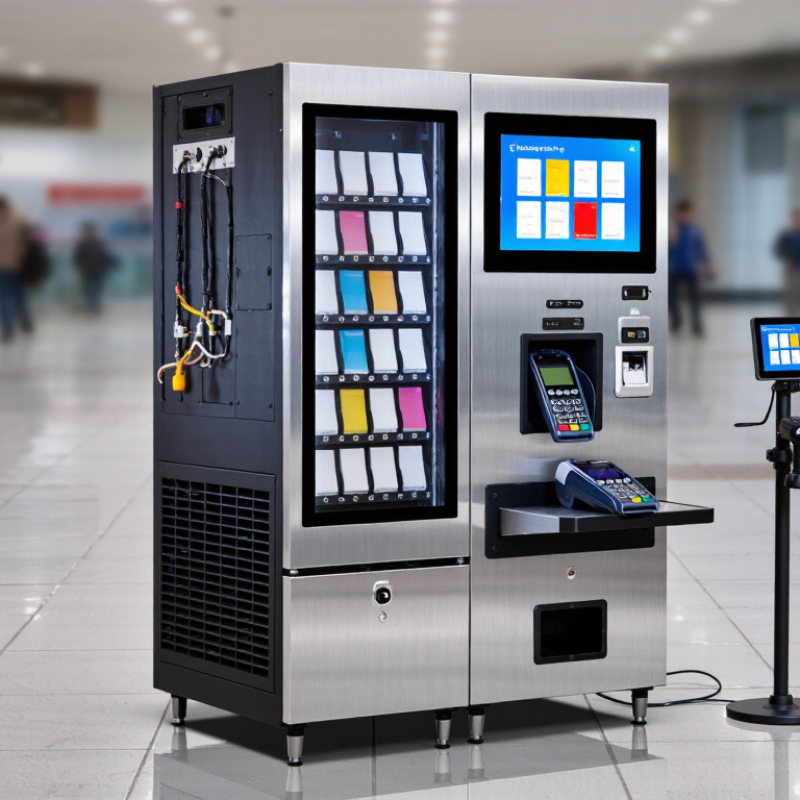
Look closely at the machine’s structure. Ask for videos showing card loading, jam recovery, screen operation, and cabinet inspection. Stainless steel panels, clear windows, protected wiring, and stable cooling systems often reveal practical manufacturing experience. However, attractive photos prove very little. A careful buyer should request samples, test reports, warranty terms, and references from comparable projects. Certifications may support trust, but they should match the actual model supplied.
Customization is another important factor. Manufacturers may offer different capacities, touchscreen sizes, payment interfaces, branding options, and network functions. The best choice depends on local users, card dimensions, installation conditions, and operating hours. A machine designed for a quiet museum may not suit a crowded railway station. That difference is easy to miss.
Service quality also deserves attention. Can the supplier provide spare parts quickly? Is remote troubleshooting available? Are manuals clear enough for local staff? These questions can prevent expensive downtime. Some manufacturers may promise everything during negotiations. Delivery can tell a different story. Therefore, this guide compares leading Chinese suppliers through evidence, not slogans, while recognizing that no factory is perfect. Real performance should be verified before a large order.
What Are Card Vending Machines and How Do They Work?
Card vending machines are automated retail units that sell physical products through card-based payments. They may dispense transport passes, gift cards, access cards, or other permitted items. A customer selects an item, taps or inserts a bank card, and waits for payment approval. The controller then unlocks a motor, locker, or dispensing tray. A sensor confirms the item moved correctly.
The process is simple, but the engineering is not. The machine needs a secure payment terminal, product sensors, temperature control when required, and remote monitoring. Operators can track stock, failed transactions, cabinet temperature, and maintenance alerts through cloud software. Grand View Research valued the global vending machine market at about USD 18.3 billion in 2023. It also forecasts strong growth through 2030. Worldpay’s Global Payments Report 2024 found digital wallets represented about 30% of global point-of-sale transaction value in 2023. Card and wallet acceptance is becoming essential.
China-based manufacturers often compete through customization, compact cabinets, multilingual screens, and local payment integration. Buyers should verify payment certification, data protection, refund handling, and spare-part availability before ordering. Ask for real test records. Marketing claims can be optimistic. A machine may look advanced but still suffer from poor sensor calibration or slow support. Reported market figures also vary because some studies include all vending equipment, while others count only smart retail systems. That distinction deserves careful checking.
China Top Card Vending Machine Manufacturers? - What Are Card Vending Machines and How Do They Work?
| Data Dimension | Typical Specification or Range | How the Machine Works | Practical Application |
|---|---|---|---|
| Primary Function | Automated dispensing of prepaid, stored-value, access, identification, or membership cards | The user selects a card or service, completes payment or verification, and the machine releases the card through an internal dispensing channel. | Suitable for transport stations, campuses, visitor centers, retail locations, entertainment venues, and self-service facilities. |
| Supported Card Formats | Standard plastic cards, contactless cards, magnetic-stripe cards, printed cards, and selected paper or ticket formats | Adjustable rollers, feeders, and card paths move cards from storage to the output tray. The mechanism must match the card thickness and surface finish. | Card format compatibility should be confirmed before installation because card dimensions and thickness vary by application. |
| Typical Card Thickness | Approximately 0.30–0.84 mm for common plastic-card applications | A calibrated separation mechanism prevents multiple cards from being pulled out at the same time. | Machines handling mixed card thicknesses may require adjustable feeding components or separate storage channels. |
| Storage Capacity | Common configurations range from approximately 100 to 1,000 cards per cabinet, depending on card size and storage layout | Cards are arranged in one or more magazines. Sensors monitor the remaining quantity and can trigger a refill notification. | Higher-capacity configurations reduce replenishment frequency in busy locations. |
| Card Dispensing Process | Single-card dispensing with jam detection and output confirmation | After authorization, a motor-driven feeder separates one card, transfers it along the card path, and confirms delivery using optical or mechanical sensors. | Output confirmation helps prevent payment completion without successful card delivery. |
| Optional Card Personalization | Printing, numbering, encoding, QR-code generation, magnetic-stripe writing, or contactless-chip programming, subject to the selected system | The machine can personalize a blank card before dispensing when compatible printers, encoders, software, and secure data connections are installed. | Useful for temporary access credentials, loyalty cards, visitor passes, and selected transport or event cards. |
| Payment Methods | Coins, banknotes, payment cards, contactless payment, QR-code payment, or mobile payment, depending on the market and configuration | A payment module validates the transaction and sends an authorization signal to the vending controller before dispensing. | Payment options should comply with local financial regulations and the requirements of the payment service provider. |
| User Interface | Touchscreen or push-button interface with multilingual prompts and transaction instructions | The interface guides the user through product selection, payment, confirmation, error handling, and receipt or card collection. | A clear interface reduces transaction time and supports unattended operation. |
| Connectivity | Ethernet, Wi-Fi, cellular communication, or local offline operation | Connected machines can transmit sales records, inventory levels, fault alerts, payment status, and maintenance information to a central platform. | Remote monitoring is especially useful for machines installed across multiple locations. |
| Security Features | Lockable cabinet, controlled access panels, transaction logs, alarm inputs, encrypted communication, and optional camera integration | The controller records operating events and can restrict access to maintenance areas or administrative functions. | Security requirements should be selected according to the value of the cards, location risk, and applicable data-protection rules. |
| Power Requirements | Typically single-phase AC power; exact voltage, frequency, and consumption depend on the cabinet, screen, printer, cooling, and payment modules | Power is distributed to the controller, display, motors, sensors, payment devices, and optional personalization equipment. | Electrical specifications must be matched to the installation site before deployment. |
| Operating Workflow | Selection → payment or identification → validation → card preparation, if required → dispensing → confirmation | The control system coordinates the user interface, payment module, card feeder, optional encoder or printer, and status sensors. | This workflow supports both simple card sales and more advanced personalized-card transactions. |
| Maintenance Requirements | Card replenishment, payment-module inspection, printer or encoder servicing, cleaning, software updates, and jam removal | Maintenance staff access the service area to refill magazines, replace consumables, clear card paths, and review diagnostic messages. | Preventive maintenance helps maintain dispensing accuracy and reduces service interruptions. |
| Selection Criteria | Card type, capacity, payment method, personalization needs, connectivity, environmental conditions, accessibility, and service support | The final system is configured by matching mechanical, electronic, software, and compliance requirements to the intended operating environment. | A detailed site and card specification review is recommended before purchasing or commissioning a machine. |
Related Posts
-
Top 10 Card Vending Machine Suppliers Worldwide
-
Top Snack Vending Machines for Global Buyers to Consider?
-
Exploring the Future of Automotive Innovation: Car Reader Technologies at the 138th Canton Fair 2025
-
How to Secure Vending Machine Financing: Tips for 2025 Entrepreneurs
-
How to Choose the Best Refrigerated Vending Machine for Your Business Needs
-
What is a refrigerated vending machine and how does it work?