How to Choose a Reliable Carbon Steel Sheet Supplier?
Choosing a reliable Carbon Steel Sheet Supplier} requires more than comparing prices on a spreadsheet. Steel sheets support bridges, machinery frames, storage tanks, and everyday fabrication. Their performance depends on chemistry, thickness accuracy, surface condition, and traceability. A certificate alone is not enough.
The World Steel Association’s World Steel in Figures 2024 reports approximately 1.89 billion tonnes of crude steel production in 2023. This scale creates broad supplier choices, but it also increases quality variation. The OECD’s Steel Outlook 2024 highlights continuing global capacity and trade pressures. These conditions can influence lead times, pricing, documentation, and product consistency. Buyers should therefore examine mill sources, inspection procedures, and delivery records before signing a contract.
Look beyond the quotation.
An experienced purchasing team should request mill test certificates, heat numbers, dimensional tolerances, coating details, and applicable standards. Common references include ASTM A36, ASTM A572, EN 10025, and ISO-based quality systems, depending on the application. Confirm that certificates match the actual bundle, not merely a standard template. Ask how the supplier handles nonconforming sheets, delayed shipments, and independent inspection.
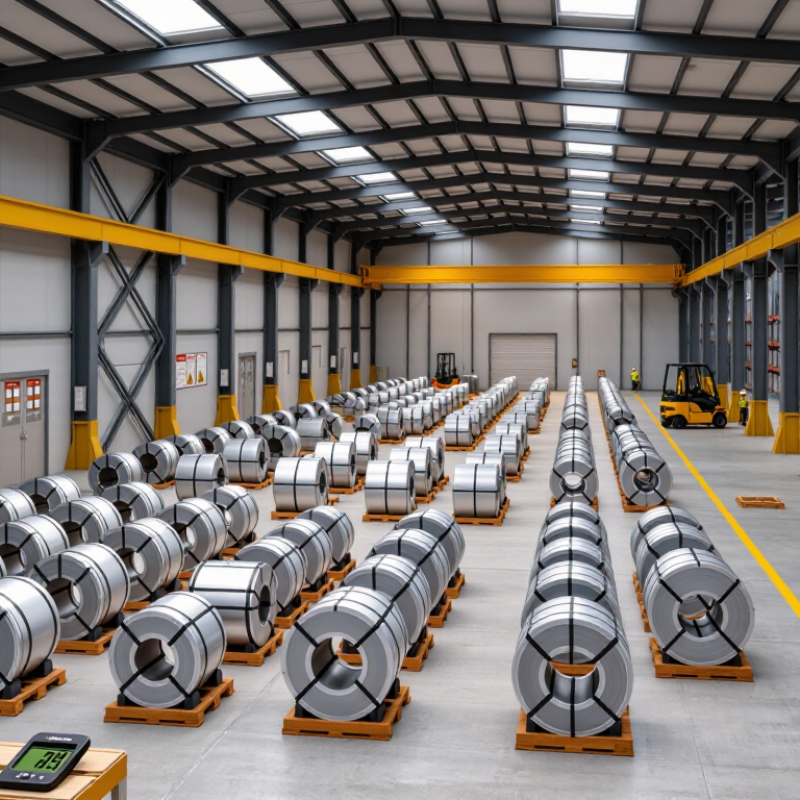
Site visits can reveal practical details: organized coil storage, readable labels, dry warehouses, and calibrated measuring equipment. These small signs matter. However, no checklist is perfect. A polished facility may still hide weak communication or inconsistent subcontracting. My recommendation is to test a supplier with a controlled trial order, then compare thickness readings, surface quality, packaging, and promised delivery dates. Reliable sourcing is built through evidence, not confident claims.
What Defines a Reliable Carbon Steel Sheet Supplier?
A reliable carbon steel sheet supplier proves quality through repeatable evidence, not polished promises. Ask for mill test certificates, chemical composition, tensile strength, yield strength, and thickness tolerances. These records should match the delivered sheets. Small mismatch matters. Experienced buyers also inspect edges, surfaces, flatness, and protective packaging before accepting a shipment. Rust marks, uneven cuts, or damp wrapping can reveal weak storage practices. A supplier should explain its inspection process clearly, including sampling frequency and equipment calibration.
Reliability also appears in communication. The supplier should confirm specifications, production schedules, packing details, and delivery risks in writing. When a delay occurs, honest notice is more useful than vague reassurance. Ask how the team handles nonconforming sheets, replacement requests, and traceability by heat or batch number. A dependable supplier can provide references, relevant certifications, and practical answers without avoiding difficult questions.
Still, certificates alone are not enough. I have seen well-organized documents hide unclear tolerances or unsuitable surface conditions. That is why a small trial order can be wise. Measure it carefully. Compare results with the agreed specification, then record every concern. No supplier is perfect. During the review, consider whether the supplier responds promptly and adjusts procedures when evidence exposes a weakness.
How to Evaluate Steel Quality, Grades, and Product Standards
Choosing a carbon steel sheet supplier starts with measurable quality, not a polished catalogue. A practical inspection lesson is simple: request the mill test certificate before approving the order. It should identify heat number, chemical composition, tensile strength, yield strength, elongation, thickness, and test method. The World Steel Association’s World Steel in Figures 2024 reports global crude steel production above 1.8 billion tonnes in 2023. That scale makes traceability essential, because production volume does not guarantee consistent sheet quality.
Grade selection must match the design load and forming process. ASTM A36 is commonly specified with a 36 ksi minimum yield strength in thinner sections, while EN 10025-2 S355 generally requires 355 MPa minimum yield strength up to 16 mm thickness. These values change with thickness and standard edition. Check the full specification. Do not trust grade names alone. Ask whether the sheet is hot-rolled, pickled and oiled, normalized, or cold-reduced. Surface condition affects welding, painting, and later corrosion protection.
A reliable supplier should provide dimensional inspection records based on the stated tolerance standard, such as ASTM A6 or EN 10029. Independent laboratory verification adds credibility when the application is critical. ISO 9001 certification supports process control, but it does not prove every sheet meets your purchase specification. A certificate is evidence, not proof. I would also compare several delivered samples, because one test report may hide variation between heats. That extra check costs time. It can prevent expensive rework.
How to Evaluate Carbon Steel Sheet Quality, Grades, and Standards
This comparison shows representative minimum specified mechanical properties for widely used carbon steel grades. Yield strength indicates the stress at which permanent deformation begins, while tensile strength represents the approximate minimum stress required to break the material. Actual values may vary by product thickness, delivery condition, and applicable standard, so suppliers should provide current mill test certificates for verification.
Which Manufacturing and Quality Control Processes Matter?
A reliable carbon steel sheet supplier is judged by its manufacturing controls, not polished brochures. The World Steel Association reported 1,892.2 million tonnes of crude steel production in 2023. Such scale makes traceability essential. Ask for the heat number, chemical composition, rolling records, and material test certificate for every batch.
Quality control should begin with incoming slab inspection. During rolling, the supplier should monitor temperature, thickness, width, and flatness. Optical emission spectroscopy verifies carbon and alloying elements. Tensile, bend, and impact tests confirm performance. Ultrasonic testing can reveal internal discontinuities. Surface checks should identify scratches, laminations, scale, and edge cracks under suitable lighting.
Small details matter.
ISO’s 2022 Survey recorded 1,265,216 ISO 9001 certificates worldwide. Certification supports process discipline, but it does not guarantee perfect sheets. That distinction is often missed. Request calibration records for gauges and testing equipment, plus nonconformance reports and corrective actions. A serious supplier can explain how a failed coil was isolated and retested. Independent inspection before shipment adds confidence, especially for structural or pressure-related applications. Still, even a strong system may contain human errors. A thoughtful buyer should compare certificates with actual inspection results, retain samples, and review recurring defects rather than trusting one impressive audit.
How to Check Certifications, Supply Capacity, and Delivery Reliability
How to Choose a Reliable Carbon Steel Sheet Supplier?
A reliable supplier should provide current certifications, not scanned documents from years ago. Ask for ISO 9001 records, mill test certificates, and inspection reports for each batch. Check the certificate number, issuing body, validity date, and material grade. Compare the chemical composition and mechanical results with your required specification. A professional supplier should explain unclear data without avoiding direct questions. Visit the facility if possible. Seeing labeled coils, calibrated equipment, and organized storage can reveal more than a sales presentation.
Tips: Request production figures for your required thickness, width, grade, and monthly volume. Ask whether the stated capacity is actual output or only theoretical capacity. Confirm available stock, backup production lines, and planned maintenance periods. A small trial order can expose quality variation. This step may feel slow, but it protects larger purchases.
Delivery reliability depends on evidence. Request recent on-time delivery records, realistic lead times, packing details, and shipment tracking procedures. Confirm how the supplier handles damaged edges, incorrect quantities, or delayed vessels. Written procedures matter. Still, no supplier controls every port delay or raw-material shortage. My own checks have sometimes focused too heavily on certificates and overlooked communication speed. A dependable partner reports problems early, gives revised dates, and keeps records from quotation to final delivery. Details matter.
| Evaluation Dimension | What to Check | Reliable Evidence or Document | Practical Screening Benchmark | Recommended Verification Method |
|---|---|---|---|---|
| Quality Management | Whether the supplier operates a controlled and repeatable quality management system. | Valid ISO 9001 certificate showing the correct legal entity, manufacturing site, scope, and validity period. | Certificate status should be valid, within scope, and independently verifiable. | Check the certificate number with the issuing certification body and confirm that the production site is covered. |
| Product Compliance | Whether the carbon steel sheet complies with the requested specification, grade, thickness, width, and tolerance. | Mill test certificate, product specification, dimensional inspection report, and applicable standard reference such as ASTM, EN, or JIS. | The certificate should state heat number, chemical composition, mechanical properties, dimensions, and test results. | Compare the certificate data with the purchase order and request a sample report before placing a large order. |
| Material Traceability | Whether each sheet or bundle can be traced back to the original heat and production records. | Heat number, bundle number, permanent marking, packing list, and traceability records. | Heat numbers should match across the product marking, mill test certificate, packing list, and invoice documents. | Select random bundles before shipment and reconcile physical markings with the supplied documentation. |
| Inspection Certification | Whether inspection documents clearly identify the inspection level and responsible party. | EN 10204 Type 3.1 inspection certificate, when required by the order, issued by the manufacturer’s authorized inspection department. | Use a 3.1 certificate when independent third-party inspection is not contractually required but detailed manufacturer test results are needed. | Confirm the certificate includes product identification, test results, applicable standards, and authorized approval. |
| Environmental and Safety Controls | Whether the supplier manages environmental impacts and workplace safety in a documented way. | ISO 14001 environmental management certificate and ISO 45001 occupational health and safety certificate, where relevant to the sourcing policy. | Certificates should be current, site-specific where applicable, and consistent with the supplier’s stated production activities. | Review certificate scope, validity, audit status, and any disclosed corrective actions or major nonconformities. |
| Production Capacity | Monthly output, equipment capability, product mix, and available capacity for the required grade and dimensions. | Capacity statement showing rolling monthly output, number of production lines, thickness range, width range, and current utilization. | The supplier should demonstrate capacity above the forecast requirement while maintaining an adequate reserve for schedule changes. | Request recent production records, equipment lists, and a capacity confirmation for the specific product configuration. |
| Raw Material Security | Whether the supplier has dependable access to slabs, coils, or other feedstock required for carbon steel sheet production. | Approved raw-material source list, procurement plan, inventory policy, and documented alternative sourcing arrangements. | The supplier should explain normal inventory coverage and its response plan for raw-material shortages or price volatility. | Review recent lead-time records and ask how supply continuity is maintained during peak demand or logistics disruption. |
| Lead-Time Control | Production lead time, document preparation time, inspection time, and shipping time from order confirmation to arrival. | Written lead-time schedule, order milestone plan, and historical performance data for comparable orders. | The committed lead time should include production, inspection, packing, customs documentation, and transportation buffers. | Compare quoted lead times with actual delivery records from at least several recent comparable shipments. |
| Delivery Reliability | Ability to deliver complete and on time against the confirmed purchase-order date. | On-time-in-full records, shipment tracking, delivery confirmations, and nonconformance reports. | A useful screening target is an OTIF rate of at least 95%; define the calculation method contractually. | Calculate OTIF as orders delivered by the agreed date and in the agreed quantity divided by total evaluated orders. |
| Packaging and Handling | Protection against corrosion, deformation, edge damage, moisture, and identification loss during transport and storage. | Packaging specification, loading photographs, moisture-protection procedure, lifting plan, and packing list. | Packaging should match sheet thickness, bundle weight, transport mode, storage duration, and destination climate. | Approve a packaging sample or loading plan and inspect bundle condition upon receipt. |
| Nonconformance Management | How quickly and systematically the supplier handles defects, shortages, dimensional deviations, or documentation errors. | Corrective and preventive action reports, claim response procedure, replacement policy, and root-cause analysis records. | The supplier should provide a written response timeline, containment action, root cause, and corrective action owner. | Review anonymized examples of closed corrective actions and confirm escalation contacts in the contract. |
| Commercial and Contract Controls | Whether specifications, tolerances, inspection rights, delivery terms, and remedies are clearly documented. | Detailed purchase contract covering grade, standard, dimensions, tolerances, quantity, inspection, Incoterms, and claim procedure. | Avoid relying on verbal commitments; all technical and delivery requirements should be measurable and written. | Conduct a pre-award contract review with purchasing, quality, logistics, and engineering stakeholders. |
How to Compare Pricing, Service, and Long-Term Supplier Value
How to Choose a Reliable Carbon Steel Sheet Supplier?
Price is only the visible part of supplier value. The World Steel Association reported global crude steel production of about 1.89 billion tonnes in 2023. Such scale creates wide pricing differences, but the lowest quotation may hide quality risks. Compare the full delivered cost, including freight, cutting, packaging, testing, and rejected sheets. Ask for a written quotation with grade, thickness tolerance, surface condition, minimum order, and payment terms.
Service can protect production schedules. Request recent mill certificates, heat numbers, dimensional inspection records, and traceability documents. A reliable supplier should explain how it handles out-of-tolerance material. Response time also matters when a shipment arrives with damaged corners or incorrect thickness. The OECD has warned about persistent global steel overcapacity, which can increase market pressure and unstable trade flows. Therefore, check inventory depth, backup production routes, and realistic lead times instead of trusting optimistic promises. My own practical view is simple: a supplier who answers technical questions clearly is often safer than one offering a dramatic discount. Not always, though.
Tips: Compare at least three quotations using the same specifications. Calculate total cost per usable tonne. Request a small trial order before signing a long-term agreement. Review delivery performance quarterly. Keep a record of claims and response times. A polished website proves little. Independent inspection can be worthwhile for critical applications.
For long-term value, assess consistency across six to twelve months. Track certificate accuracy, packaging quality, delivery variance, and claim resolution. The World Bank’s commodity outlooks also show that steel-related raw-material prices can shift quickly. A transparent adjustment formula may be fairer than an artificially fixed price. Still, formulas need clear limits and review dates. Reliability is measurable, but it is not perfectly predictable.